Brief and tech pack
The first stage turns a request into a production document. References, artwork, measurements, target quantity and destination are reviewed, and the construction, fabric and decoration are confirmed in the quotation.
This is where open questions belong. If a chamois needs sourcing, a gripper has a minimum, or a decoration needs testing on a stretch knit, it is better to know before the sample is built. The contact page lists what to send.
The output is a tech pack the sample room can work from, plus a quotation that states the MOQ, the sampling step and the production plan.
Fabric and trims
Leg-panel knit, mesh upper, chamois, gripper, binding and labels are selected against the approved swatch and the bib's end use. A 200 GSM race panel, a 240 GSM endurance panel and an open mesh upper each need different trims and different handling.
Shade, weight and hand-feel are recorded at this stage. That record becomes the reference for the bulk fabric check, so a later lot can be compared against something objective.
Sampling and approval
A physical sample is produced for fit, colour, decoration and packing approval. It is the contract for bulk: what the sample shows is what production is measured against.
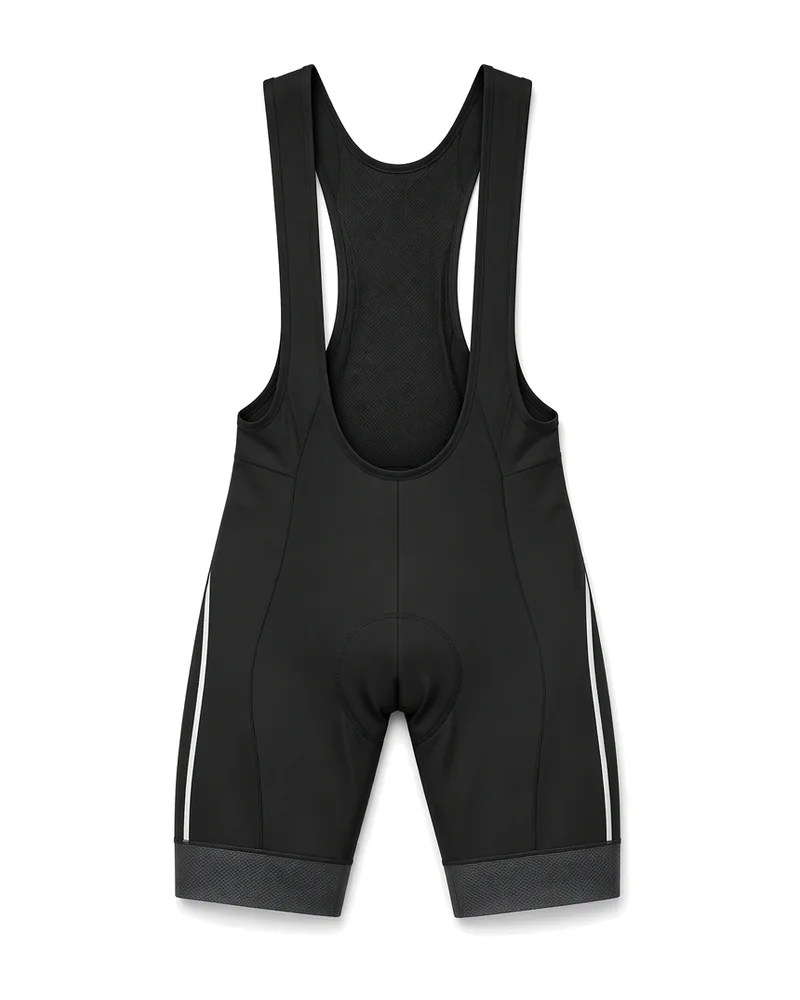
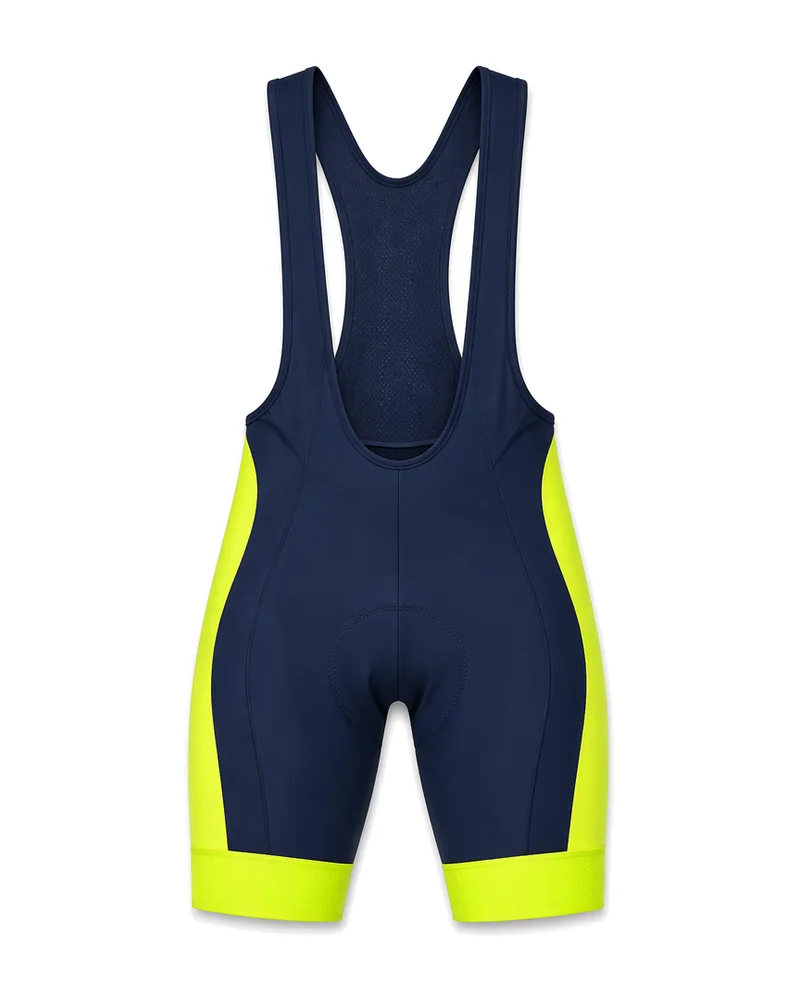
For bib shorts, the chamois, leg length and gripper are approved here alongside the upper and the colour. Comments should be consolidated into one clear round - what passes, what changes, and what is still open. The approved sample is signed off in writing, covering measurements, decoration placement, trims, labels and packing.
If a change is requested after approval, the quote and production plan may change. That is why the approval round is worth taking seriously. See the sampling and returns page for the approval terms.
Cutting and decoration
Panels are cut by size and colour, then decorated before assembly. Sublimation, embroidery, screen print, heat transfer, silicone and foil are applied according to the approved sample.
Cutting is where the size split becomes physical. Panels are bundled by size and colour so the sewing line receives the right pieces in the right order, and decoration is matched to the correct panel before it is sewn. Stretch panels are cut with the correct grain so the bib still holds compression around the leg.
Sewing and assembly
Compressive leg panels, open mesh uppers, chamois edges, binding and gripper bands are assembled with the seams and trims specified on the sample. Flatlock seams, overlocked pad edges and bonded hems are where bib shorts differ most from general apparel, and where the construction standard shows.
In-line checks run during this stage: panel measurements, seam construction, pad placement and decoration placement are reviewed while the order is still on the line, not only at the end.
The four checkpoints
Quality is built into the line. Four checkpoints protect every order:
- Fabric check: shade, weight, stretch and recovery against the approved swatch before cutting.
- In-line check: panel measurements, seam construction, pad placement and decoration during production.
- Finishing check: grippers, binding, symmetry, loose threads and measurements before packing.
- Pre-shipment check: finished quantities and packing against the approved order before dispatch.
The production page documents the seven stages and the checkpoints in sequence.
Packing and dispatch
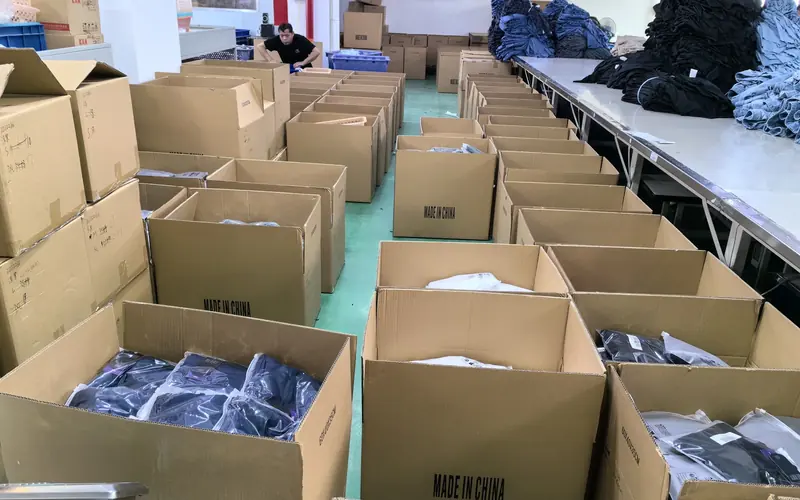
Labels, hangtags, polybags and cartons are applied to the approved packing spec, then the order is released for air or sea freight. Packing is part of the approval, not an afterthought: a club order may need sizes and rider names packed in a specific way for distribution.
For a repeat order, the same approved sample, colour swatch and packing spec are used as the reference, so the second run matches the first. If you are ready to start, send the brief through the contact page.